
Getting your vehicle repaired is only half the job. What happens in the days and weeks after you drive away from the shop determines how long that repair actually lasts. Whether you just had a dent removed, a bumper replaced, or collision damage restored, your vehicle’s exterior needs careful attention right after the work is complete. Skipping proper aftercare can undo quality work fast, leading to peeling paint, faded panels, or new damage setting in sooner than it should.
At 850 Autos, we see it often. Drivers invest in professional auto body repair services in Tallahassee, FL, then unknowingly compromise the results by washing too soon, parking in the wrong spot, or skipping routine maintenance. These six tips will help you protect your investment and keep your vehicle looking its best long after leaving the shop.
Why Post-Repair Care Matters in Tallahassee
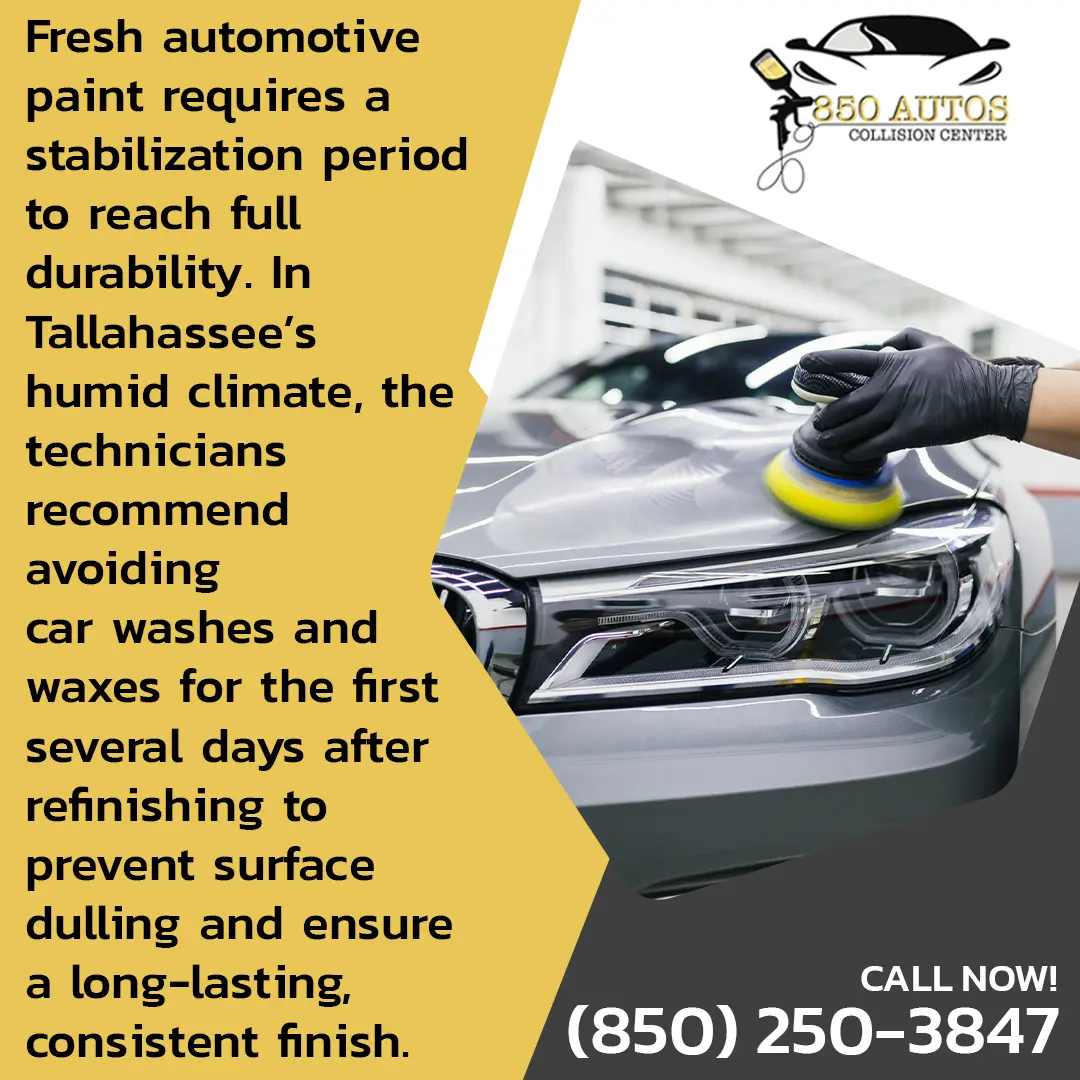
Post-repair care plays a major role in how your vehicle’s finish looks and performs long after the repair is complete. In Tallahassee, factors like heat, humidity, rain, and airborne debris can impact freshly repaired paint, making proper aftercare essential for protecting your investment.
The Curing Process Starts the Moment You Drive Away
Freshly repaired paint is more sensitive than it looks. Unlike factory paint processes, collision repair paint systems may continue curing for weeks after application, even when accelerated curing equipment is used. During this window, the clear coat and paint layers are still hardening and off-gassing solvents. Any pressure, harsh chemicals, or abrasive contact during this period can permanently affect the finish. Always follow the specific recommendations provided by your repair facility, as curing timelines can vary based on paint products, environmental conditions, and repair methods.
How Tallahassee’s Climate Affects Fresh Paint
Tallahassee’s heat, humidity, and frequent rain add another layer of challenge. High humidity can affect curing times and overall paint performance depending on the coating system used. Tree pollen, road pollutants, and sap from the area’s pine trees can settle on fresh paint before it has a chance to fully harden. Understanding your local environment is part of protecting your vehicle properly after getting auto body repair in Tallahassee, FL.
Tip 1: Wait Before You Wash
Rushing a wash is one of the most common mistakes vehicle owners make after exterior repairs. Fresh paint is still soft and sensitive to pressure, friction, and chemicals. Washing too soon can cause swirl marks, interrupt the curing process, and dull the finish before it even has a chance to fully set. Every vehicle that comes through 850 Autos goes through proper prep and finishing, but once it leaves the shop, aftercare falls on the owner.
Recommended Washing Timeline
Most auto body professionals recommend following this schedule after paintwork:
| Timeframe | What to Avoid |
| First 72 hours | Any washing at all |
| First 2 weeks | Automated car washes, pressure washing |
| First 30 days | Waxing, polishing, sealants |
| 30 to 90 days | Full wax application; wait for complete cure |
How to Wash Safely After the Waiting Period
When you do wash the vehicle for the first time, hand washing is the only safe option. Use a pH-neutral car wash soap and a soft microfiber mitt. Avoid dish soap as it strips protective coatings and dulls fresh paint. This applies to any vehicle that has recently had auto body repair, regardless of the season.
The two-bucket method works best: one bucket for soapy water, one for clean rinse water. Dip, wash a section, rinse the mitt, then repeat. This prevents recontaminating your mitt with grit that causes micro-scratches on the surface.
Skip automated car washes during the curing period. Their stiff brushes and harsh chemical solutions are too aggressive on freshly repaired surfaces.
Tip 2: Do Not Wax Until the Paint Has Fully Cured
Waxing feels like the right move right after a repair. It protects and enhances shine, but when done too early, it can create real problems. Fresh automotive paint continues to off-gas solvents as it cures. Applying wax before the paint has fully hardened traps those solvents beneath the surface.
This can result in:
- Tiny pinholes in the clear coat (known as “solvent pop”)
- Uneven finish and discoloration
- A dull or patchy appearance once the trapped solvents work their way out
When It Is Safe to Wax
The widely accepted window before waxing a freshly painted vehicle is 30 to 90 days, depending on the products used, the shop environment, and weather conditions at the time of the repair. If you received auto body repair services recently and are unsure of the right timeline, ask your technician directly. They know exactly which products were applied and can give you a specific recommendation.
How Often to Wax After the Cure Period
Once the cure period is complete, waxing every three months helps protect the finish, shields against UV rays, and keeps contaminants from bonding to the paint. A consistent waxing schedule is one of the simplest ways to extend the life of a professional repair.
Tip 3: Park in the Right Spots
Where you park after exterior repairs matters more than most drivers expect. Fresh paint is especially sensitive to:
- Bird droppings — highly acidic and can etch into the clear coat within hours
- Tree sap — bonds quickly to paint and hardens fast
- Direct sunlight — UV rays break down fresh paint faster during the curing period
- Road debris — pebbles and gravel kicked up by passing vehicles can chip new paint
Smarter Parking Habits to Protect Your Repair
Park in a covered garage or carport whenever possible. If covered parking is not available, choose a shaded spot away from trees. Avoid parking directly behind large vehicles that kick up debris. These habits matter most in the weeks right after visiting an auto body repair shop, when the paint and clear coat are at their most vulnerable.
Tallahassee’s pine trees are particularly heavy producers of sap. Even a short time under a pine can leave sticky deposits that are difficult to remove without damaging fresh paint.
If a bird dropping or sap lands on your vehicle during the curing period, remove it carefully with a damp microfiber cloth as soon as you notice it. Blot and lift gently, but do not rub.
Tip 4: Inspect Repaired Areas on a Regular Basis
Your vehicle’s repaired panels, bumpers, and painted surfaces deserve a close look every few weeks, especially in the first few months after the work is completed.
During inspections, check for:
- Lifting, bubbling, or peeling at the edges of repaired panels
- Uneven paint texture or color inconsistency in natural light
- New chips or scratches that expose bare metal
- Gaps or misalignment in bumpers or body panels
Why Early Detection Saves Money
Catching small issues early prevents them from becoming larger, more expensive problems. A tiny paint chip left unaddressed allows moisture to work its way beneath the surface, which in Florida’s humid climate can accelerate damage faster than in drier regions.
When to Go Back to the Shop
If you notice anything that does not look right after leaving the auto body repair shop in Tallahassee, FL, bring the vehicle back for a follow-up look. A reputable shop will stand behind its work and address any legitimate concerns. At 850 Autos, we encourage customers to reach out if something does not look the way it should, because a repair is not finished until the driver feels confident in the result.
Tip 5: Protect the Paint from Florida’s Elements
Tallahassee’s climate creates specific challenges for freshly repaired vehicles. Long, hot summers with intense UV exposure, frequent afternoon thunderstorms, and heavy tree pollen combine to put real stress on paint and exterior surfaces.
Protective Measures That Work
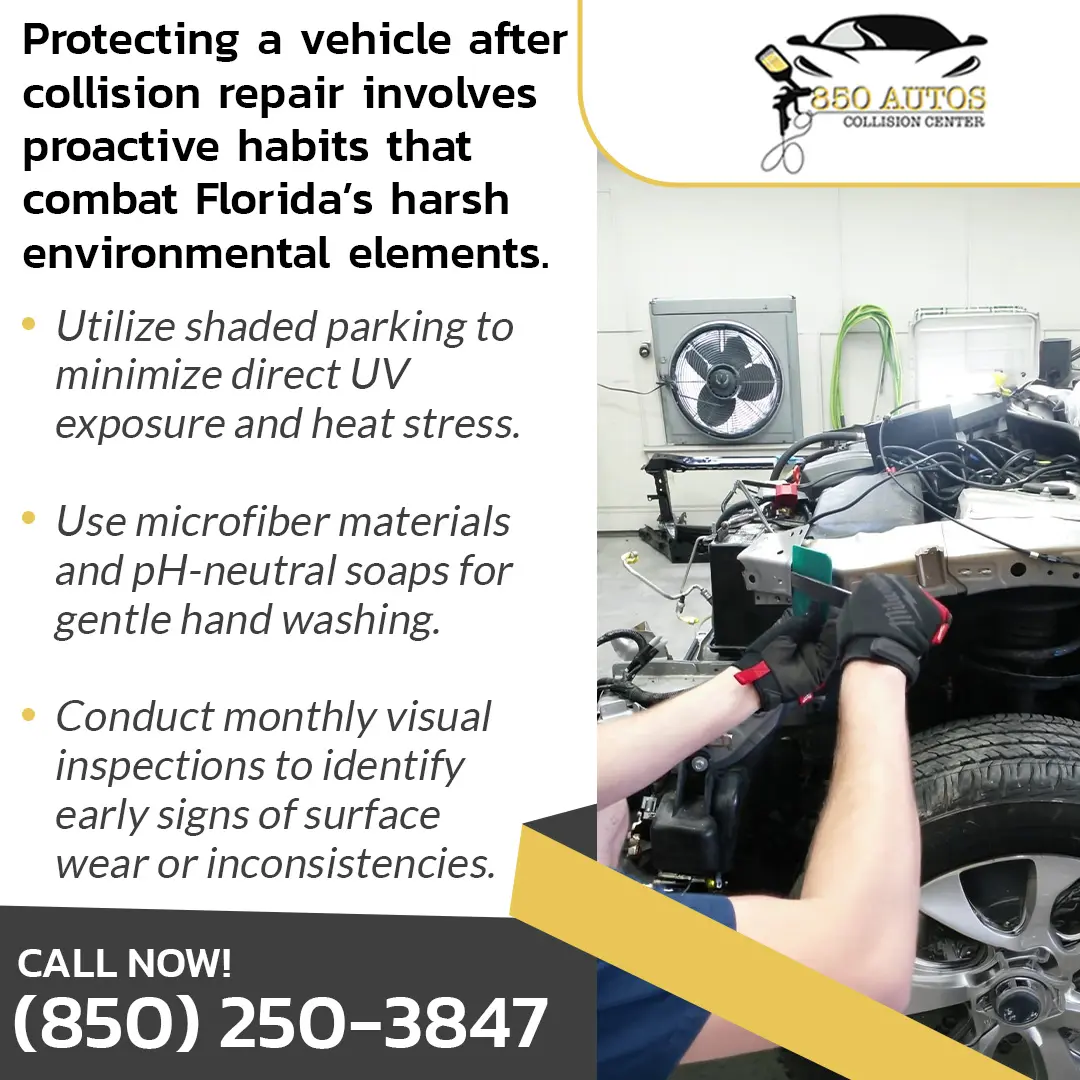
- Use a breathable car cover when a garage is not available. A good cover protects against UV rays, bird droppings, and debris without trapping moisture against the paint surface.
- Apply a protective coating once the paint has cured. After the 30-to-90-day waiting period, a carnauba wax, synthetic wax, or ceramic coating adds a durable protective layer. Ceramic coatings offer long-term resistance to UV damage, water spots, and contaminants, making them a solid choice for drivers in Florida’s climate.
- Rinse after heavy rain. Florida’s rain often carries pollen, road pollutants, and other surface contaminants. A gentle hand rinse after a heavy storm, once the cure period allows it, removes deposits before they have time to bond to the paint.
If you are ever unsure what products or methods are safe for your specific repair, calling the auto body repair shop in Tallahassee, FL, that did the work is always the right move. The 850 Autos team is always happy to answer those questions.
Tip 6: Build a Routine Exterior Maintenance Schedule
The best protection for your vehicle’s exterior after getting auto body repair services is a consistent routine. A vehicle that gets regular attention holds its finish longer, shows problems before they worsen, and maintains its value over time.
A Simple Maintenance Schedule to Follow
| Frequency | Task |
| Weekly | Quick visual inspection for chips, scratches, or debris |
| Every 2 weeks (post-cure) | Gentle hand wash with pH-neutral soap and a microfiber mitt |
| Every 3 months | Apply wax or protective coating |
| Every 6 months | Professional exterior detailing |
| Annually | Full inspection of repaired panels and paint condition |
The Value of Professional Detailing
Detailing goes further than a regular wash. A professional detail service deep cleans painted surfaces, treats rubber seals and trim, and applies protection that routine washing cannot replicate. It also puts a trained eye on your vehicle’s condition, which matters after exterior repairs. Many vehicle owners find that periodic professional detailing helps maintain the appearance of repaired surfaces and supports long-term paint protection.
What to Avoid After Exterior Repairs
A quick reference of what not to do in the weeks following your repair:
- Do not use dish soap to wash the vehicle — it strips clear coat and any existing wax
- Do not use abrasive sponges or rough towels — they cause swirl marks and micro-scratches
- Do not pressure wash the repaired area within the first 30 days
- Do not use harsh chemical cleaners on fresh paint
- Do not polish or compound the paint before the full cure period ends
- Do not ignore chips or scratches — bare metal exposed to Florida’s humidity invites moisture damage quickly
How Long Does a Professionally Repaired Finish Last?
With proper care, professionally applied automotive paint can last for many years. The factors that affect longevity most are:
- Quality of the original repair
- When waxing and protection begin after the cure period
- Consistency of routine washing and maintenance
- Parking habits
The combination of professional repair quality and disciplined aftercare is what keeps a vehicle’s finish looking sharp year after year. Drivers who choose 850 Autos for auto body repair in Tallahassee, FL, consistently report better long-term results when they pair quality repair work with the maintenance habits outlined above.
Drive Confidently: Trust 850 Autos for Auto Body Repair in Tallahassee, FL
A vehicle’s exterior is the first thing people notice. A well-maintained finish holds its value, reflects care and pride of ownership, and protects the investment you made in getting the vehicle properly repaired.
These six habits protect that investment and keep your vehicle looking the way it should. Whether you just picked up your vehicle from us or had work done elsewhere, the steps above apply the same way.
At 850 Autos, our goal goes beyond restoring your vehicle’s exterior. As a trusted auto body repair shop in Tallahassee, FL, we want every driver to leave our shop feeling confident, not just in the repair, but in how to maintain it. If you have questions about aftercare specific to your vehicle, or if something does not look right after leaving the shop, we are here to help.
Call us today at (850) 250-3847 to request an online photo estimate at your convenience. We serve Tallahassee, Woodville, Crawfordville, Quincy, Havana, Midway, and nearby areas across the region.